Commercial and residential deep cleaning goes beyond the visible surfaces handled during routine cleaning. It targets accumulated dust, grease, residue, stains, and neglected areas throughout a home or business.
For Houston homeowners, renters, landlords, facility managers, and business owners, a deep cleaning service can be useful before moving, after construction, during seasonal maintenance, or whenever ordinary cleaning is no longer producing satisfactory results.
However, deep cleaning is not one standardized package. The work needed in an apartment may be very different from the work required in an office, restaurant, warehouse, or large family home. Understanding the process helps you request the right services and compare cleaning companies fairly.
What Is Commercial and Residential Deep Cleaning?
Deep cleaning is a detailed service that addresses areas commonly skipped during routine housekeeping or janitorial cleaning.
Regular cleaning generally covers recurring tasks such as:
- Vacuuming or sweeping floors
- Mopping open areas
- Wiping counters
- Emptying trash
- Cleaning toilets and sinks
- Dusting accessible surfaces
A deep cleaning checklist may include those tasks, but it normally extends the work to baseboards, appliance surfaces, cabinet fronts, grout lines, corners, vents, fixtures, furniture edges, and other hard-to-reach areas.
The purpose is not simply to make a property look tidy. It is to remove layers of residue that have built up over time.
Cleaning, Sanitizing, and Disinfecting Are Different
These terms should not be used interchangeably.
Cleaning physically removes dirt, dust, grease, and other material from a surface. Sanitizing lowers the number of germs to a level specified by a product or public-health standard. Disinfecting uses an appropriate chemical product to kill specified germs when the label directions are followed.
Surfaces should generally be cleaned before they are sanitized or disinfected. Dirt and other residue can interfere with a disinfectant’s effectiveness. rofessional deep cleaning company should explain which of these services it is providing instead of describing every task as “sanitization.”
Why Deep Cleaning Matters for Houston Properties
Houston properties can experience tracked-in soil, rain-related residue, humid conditions, kitchen grease, pet hair, pollen, and heavy use of air-conditioning systems. Local weather records reflect the area’s recurring rainfall and humidity, although conditions vary throughout the year. r time, residue may collect in areas that receive little attention during weekly cleaning. Examples include the space behind appliances, bathroom grout, window tracks, baseboards, ceiling fans, upholstered furniture, and the edges of commercial flooring.
Detailed cleaning matters because it can:
- Improve the overall appearance of a property
- Reduce accumulated dust and surface residue
- Make routine cleaning easier to maintain
- Prepare a property for new occupants
- Support a cleaner customer or workplace environment
- Reveal damaged caulk, leaks, stains, or maintenance issues
- Help protect flooring, fixtures, and finished surfaces from neglected buildup
Deep cleaning has limits, however. It does not repair water intrusion or automatically solve a mold problem. The EPA emphasizes that moisture control is central to mold control. A leak or moisture source must be corrected rather than covered with cleaning products. What Is Included in Residential Deep Cleaning?
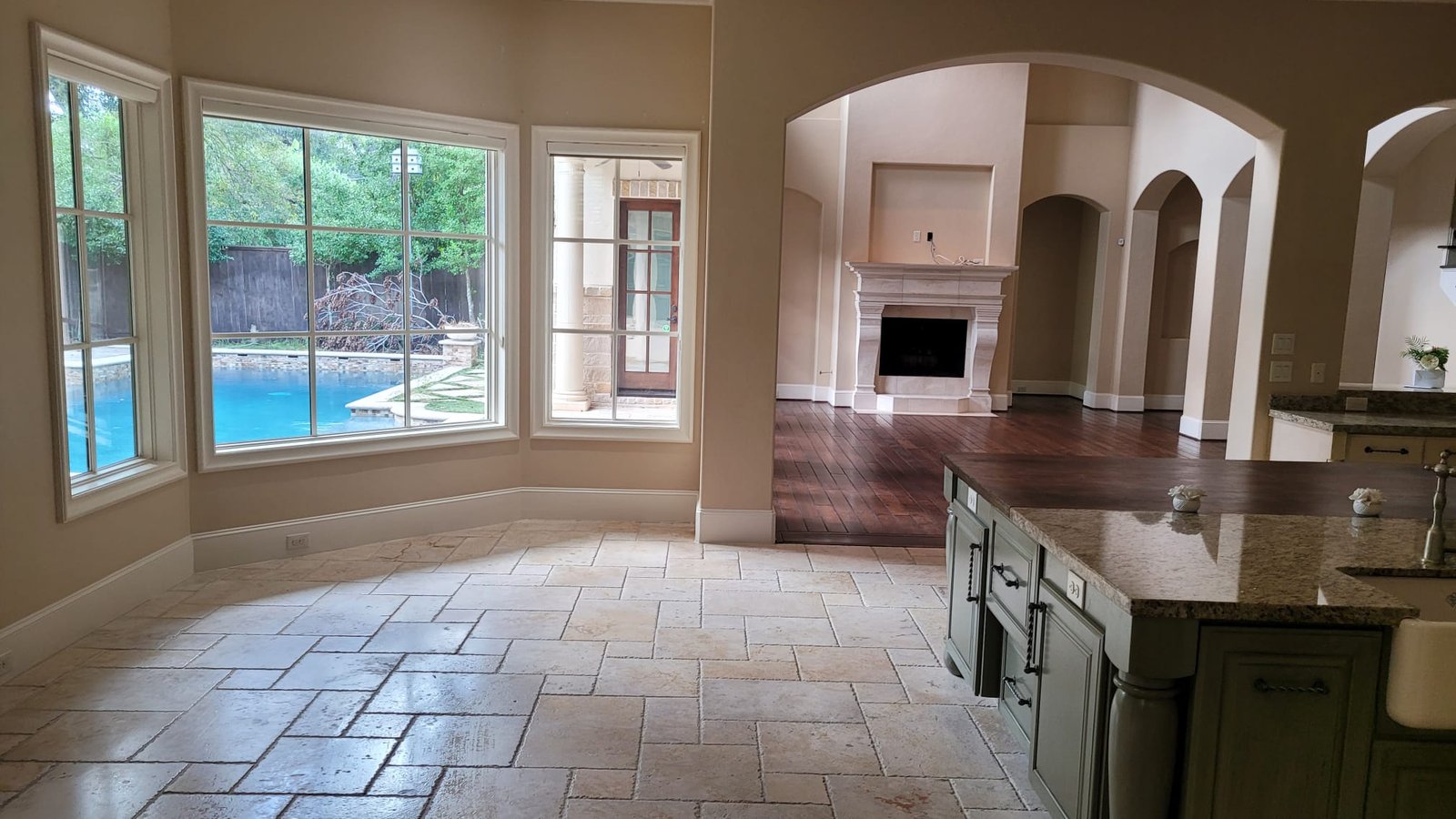
Residential deep cleaning services are designed for houses, apartments, condos, rental properties, and vacation homes. The exact checklist depends on the company and the property’s condition.
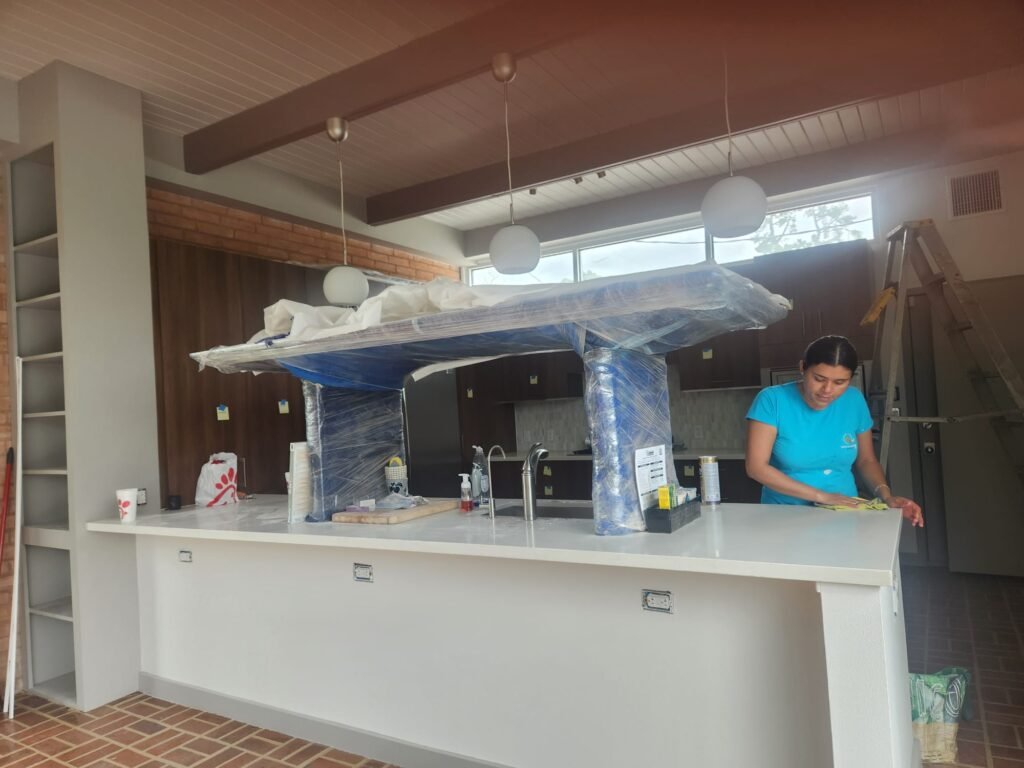
Kitchen Deep Cleaning
Kitchen work may include:
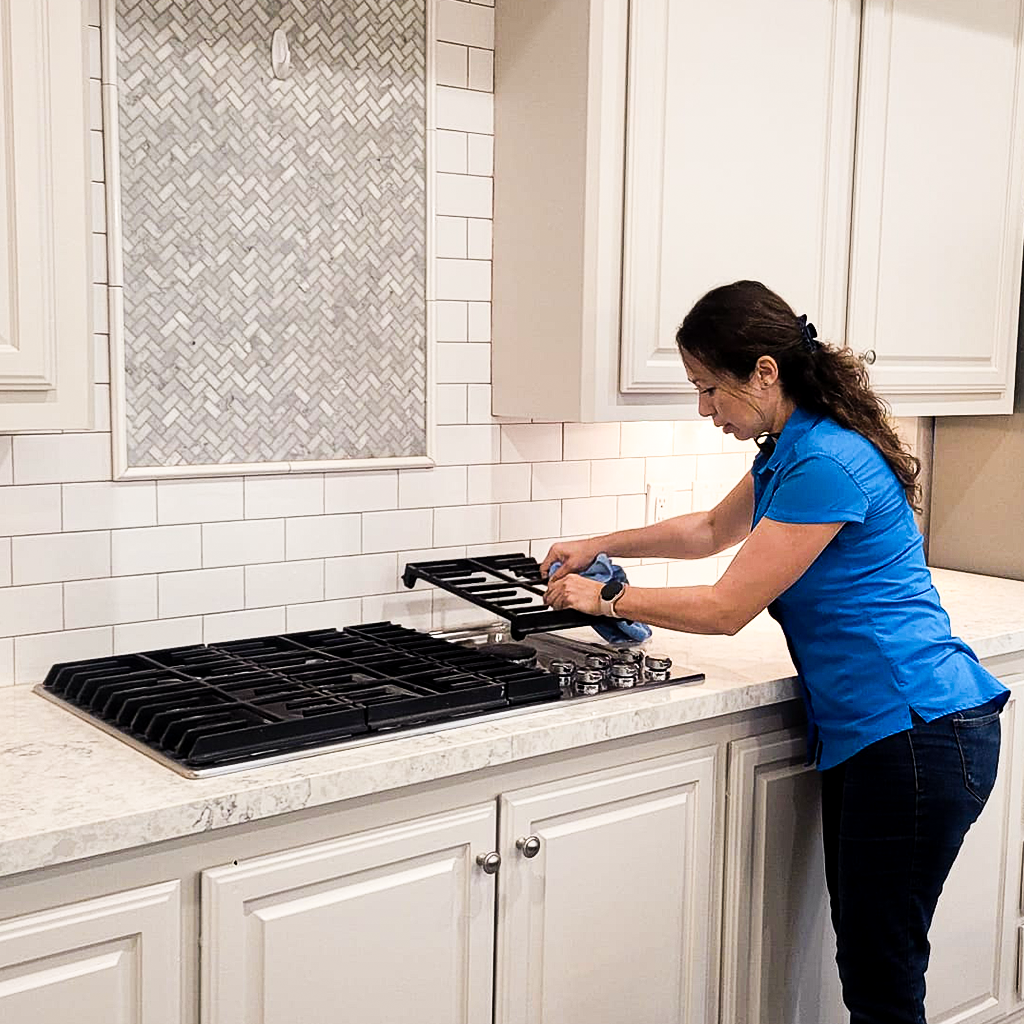
- Degreasing counters and backsplashes
- Cleaning cabinet and drawer fronts
- Wiping appliance exteriors
- Cleaning inside the microwave
- Removing residue from the stovetop
- Scrubbing sinks and faucets
- Cleaning reachable vents
- Wiping doors, handles, and switches
- Cleaning baseboards and floor edges
- Vacuuming and mopping beneath movable items
Cleaning inside an oven, refrigerator, dishwasher, or occupied cabinet is often an add-on. Ask whether kitchen appliance cleaning includes interiors before accepting an estimate.
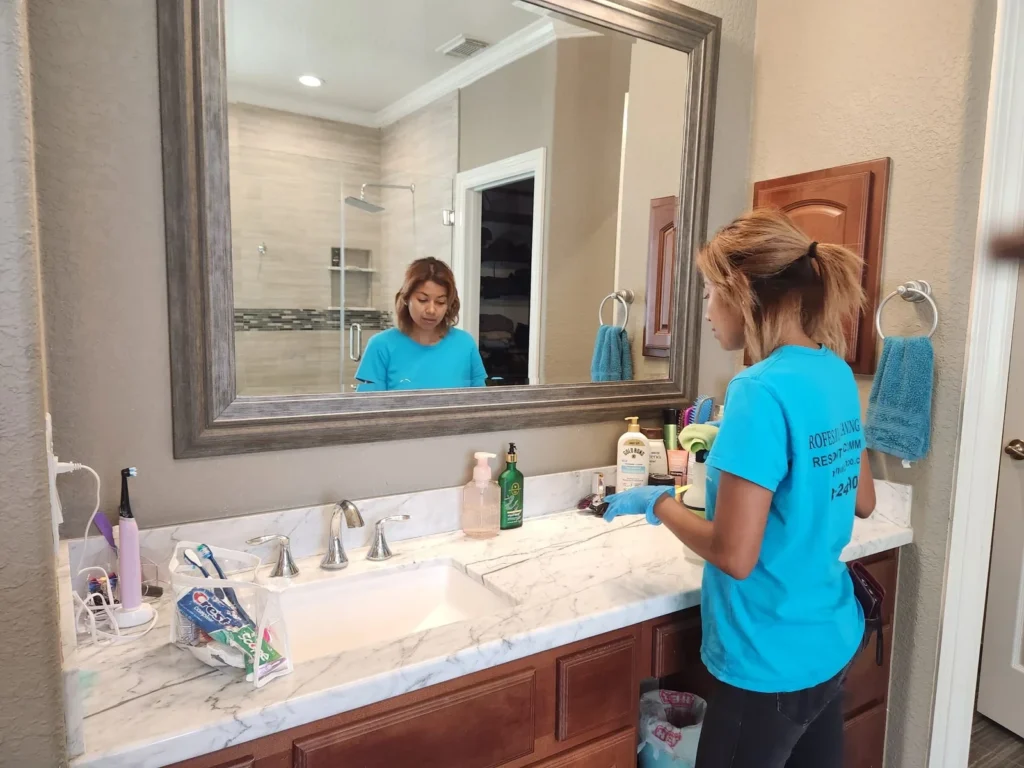
Bathroom Deep Cleaning
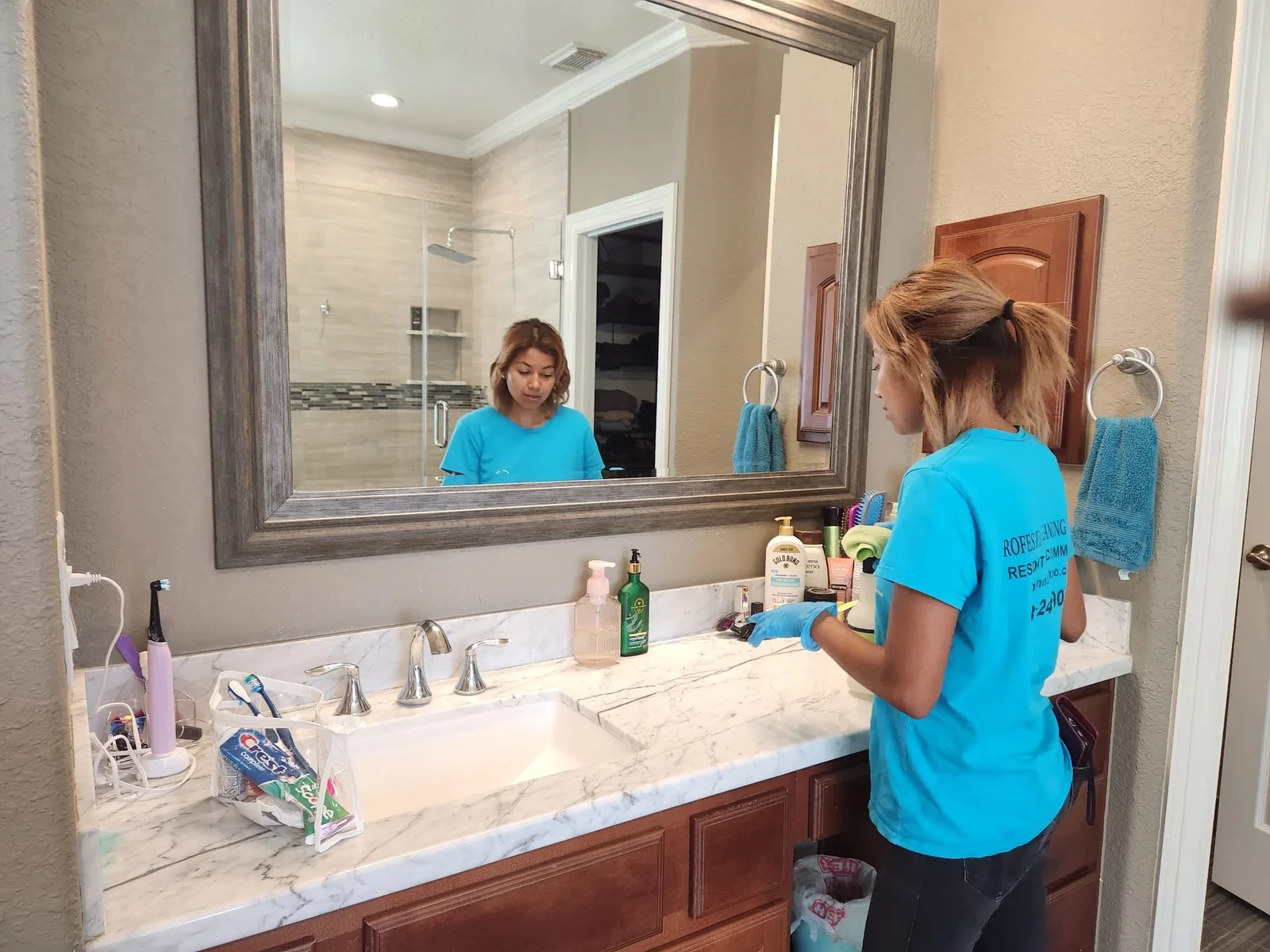
Bathroom deep cleaning services usually focus on mineral residue, soap buildup, dust, and frequently touched surfaces.
Common tasks include:
- Cleaning toilets, sinks, showers, and tubs
- Scrubbing tile and grout
- Wiping mirrors and glass
- Cleaning fixtures and hardware
- Removing accessible soap residue
- Wiping vanity fronts
- Cleaning baseboards and floor edges
- Dusting vents and light fixtures
- Cleaning doors, handles, and switches
Severely stained grout, damaged caulk, hard-water etching, and permanent discoloration may not return to a like-new condition through cleaning alone.
Bedrooms and Living Areas
Whole-house deep cleaning may also cover:
- Ceiling fans
- Window sills and tracks
- Baseboards
- Doors and frames
- Blinds or shutters
- Furniture exteriors
- Shelving
- Floor edges
- Accessible air-return covers
- Light fixtures
- Areas beneath movable furniture
For homes with pets, the scope may include detailed pet hair removal from floors, stairs, furniture edges, and accessible upholstery. Heavy upholstery cleaning normally requires separate equipment and should be listed as an additional service.
Special Residential Cleaning Services
A one-time deep cleaning service may be scheduled for:
- Spring cleaning
- Move-in deep cleaning
- Move-out deep cleaning
- End-of-tenancy cleaning
- Apartment deep cleaning
- Airbnb or vacation rental turnover
- Cleaning after a renovation
- Preparing a home for sale
- Cleaning before or after an event
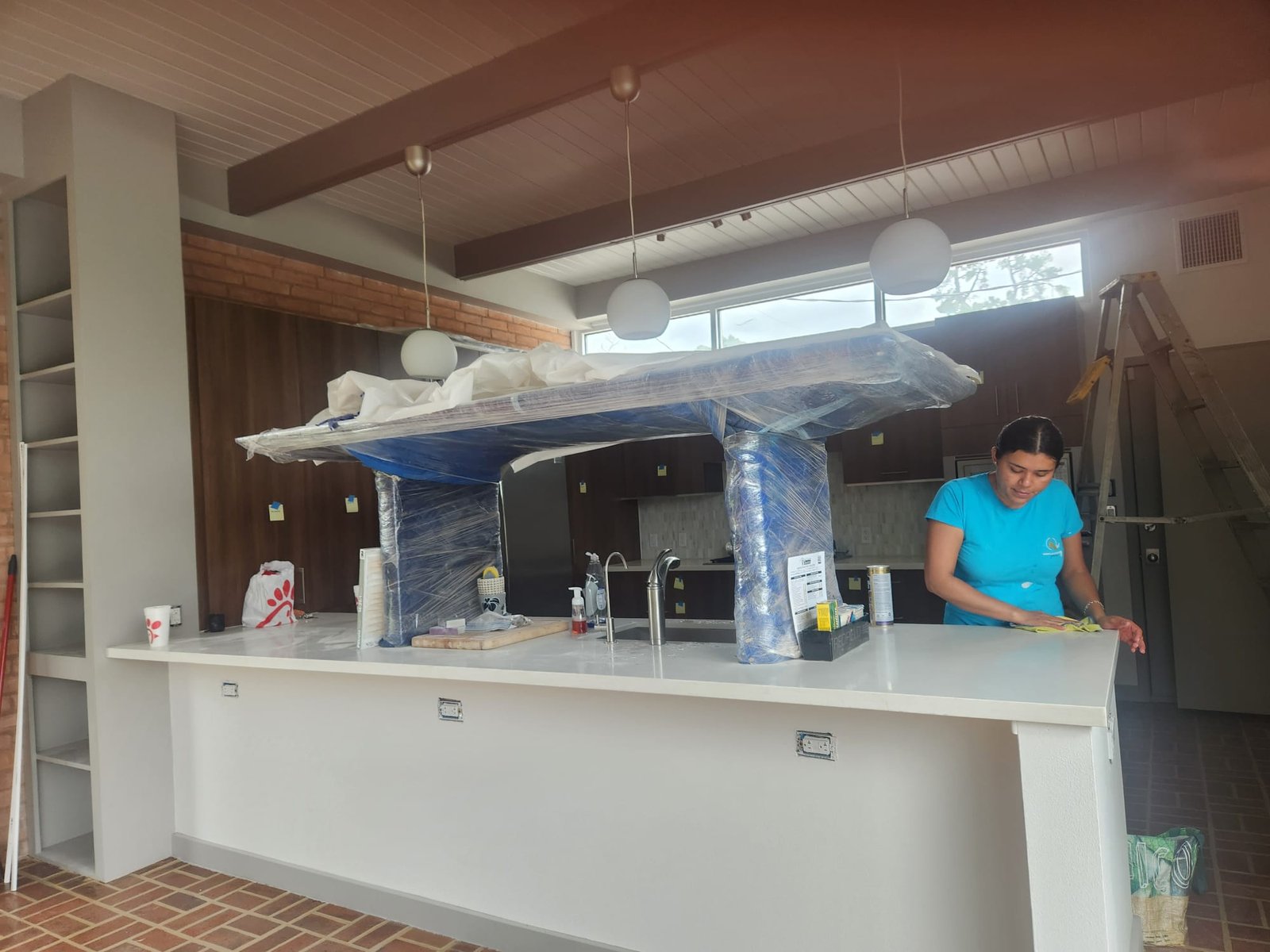
Post-construction cleaning deserves special attention. Fine construction dust may settle repeatedly after the first visit, and paint, adhesive, grout haze, or building debris may require specialized methods.
What Is Included in Commercial Deep Cleaning?
Commercial deep cleaning services are adapted to the building’s purpose, traffic level, operating schedule, and safety requirements.
Office and Corporate Building Cleaning
Office deep cleaning services may include:
- Detailed workstation cleaning
- Conference-room surfaces
- Breakroom appliances and cabinets
- Commercial restroom cleaning
- Interior glass and partitions
- Doors, frames, and baseboards
- Floor scrubbing
- Carpet spot treatment
- High-touch surface cleaning
- Dust removal from ledges and accessible vents
An after-hours office cleaning plan can reduce disruption, but the company should explain access control, alarm procedures, key management, and closing responsibilities.
Retail, Restaurant, and Gym Cleaning
Customer-facing businesses often have high-traffic areas that need more intensive cleaning than standard office space.
Retail store deep cleaning may focus on entryways, displays, fitting rooms, checkout areas, glass, and flooring.
Restaurant deep cleaning services may cover dining areas, restroom surfaces, floor edges, accessible equipment exteriors, and selected kitchen surfaces. Commercial kitchen deep cleaning can require degreasers, specialized tools, and a clearly defined scope.
Gym deep cleaning services may include floors, mirrors, locker rooms, equipment contact surfaces, and shared facilities. Cleaners should follow equipment-manufacturer instructions and product labels to avoid damaging sensitive materials.
Specialized Commercial Properties
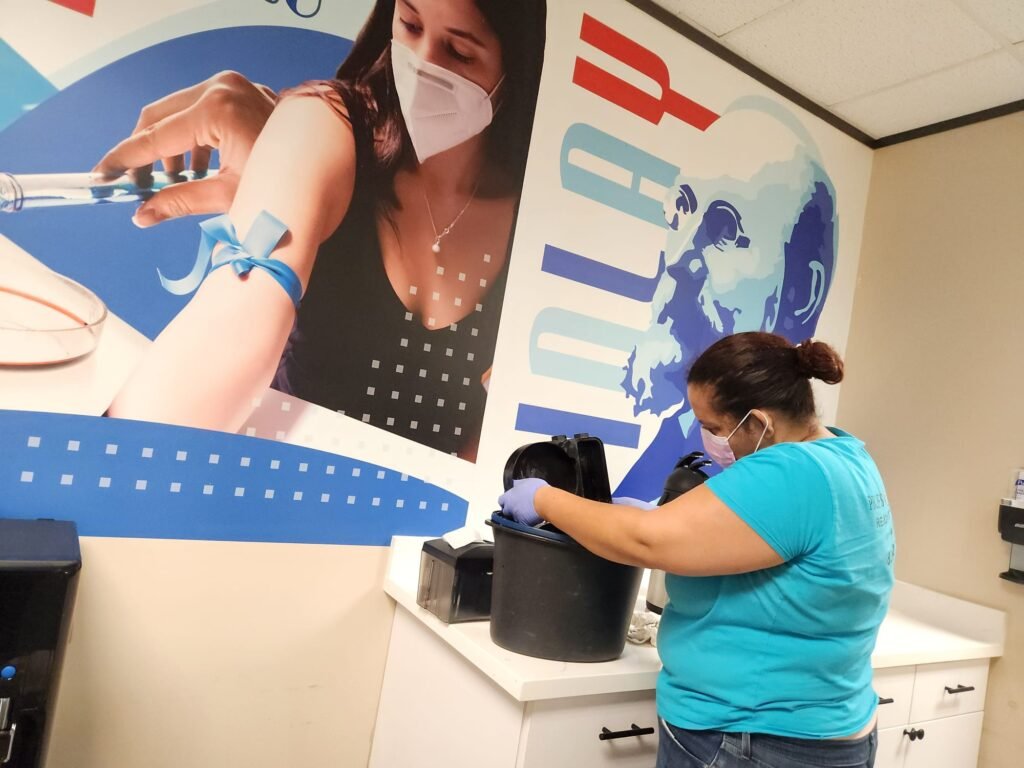
Medical offices, schools, daycares, hotels, warehouses, and industrial properties may have requirements beyond ordinary business premises cleaning.
These facilities may need:
- Site-specific cleaning protocols
- Product documentation
- Staff training records
- Personal protective equipment
- Restricted-area procedures
- Equipment lockout rules
- Waste-handling instructions
- Coordination with facility or safety managers
A general cleaning company should not imply that it is qualified for regulated or hazardous work unless it has the necessary training, procedures, and insurance.
Commercial Cleaning vs. Residential Cleaning
The basic goal is similar: remove accumulated dirt and residue. The operating conditions are different.
Residential cleaning usually involves smaller spaces, personal belongings, household fixtures, pets, and direct communication with the occupant.
Commercial cleaning may involve larger floor areas, multiple restrooms, higher traffic, specialized flooring, controlled access, business equipment, and work outside normal operating hours. It may also require proof of insurance, written safety procedures, inspection records, and coordination with several decision-makers.
For that reason, the lowest residential rate should not be used as a benchmark for a commercial cleaning estimate.
The Professional Deep Cleaning Process
A well-organized service normally follows several stages.
1. Property Assessment
The cleaning company reviews the property type, approximate size, current condition, access limitations, surface materials, and priority areas.
Photographs or an on-site walkthrough can help prevent misunderstandings.
2. Written Scope of Work
A customized cleaning plan should identify:
- Included rooms and areas
- Specific cleaning tasks
- Excluded services
- Optional add-ons
- Products or equipment to be used
- Estimated staffing
- Access arrangements
- Completion and inspection procedures
3. Preparation
Cleaners protect sensitive surfaces, arrange equipment, identify hazards, and confirm which items may be moved.
4. Top-to-Bottom Cleaning
Professional cleaners often begin with higher surfaces so loosened dust can be collected from lower surfaces and floors later.
The team then works through the agreed checklist systematically rather than cleaning only the most visible areas.
5. Sanitizing or Disinfecting
When requested, appropriate surfaces are treated after cleaning. Products must be suitable for the surface and used according to label instructions, including any required wet contact time.
6. Final Inspection
The supervisor or customer reviews the completed work against the agreed checklist. Any missed or inaccessible areas should be documented.
How Often Should a Property Be Deep Cleaned?
There is no universal schedule.
Many households use one or two deep cleanings per year as a starting point. Homes with pets, children, frequent guests, allergy concerns, or heavy cooking may need more frequent service.
Businesses may schedule intensive cleaning quarterly, semiannually, annually, or around operational events. A busy restaurant, daycare, gym, or medical office will usually need a different plan from a lightly occupied professional office.
Consider deep cleaning when:
- Routine cleaning no longer removes visible buildup
- A property is changing occupants
- Renovation work has been completed
- Floors or grout appear persistently dull
- Dust returns quickly from neglected areas
- A major event or inspection is approaching
- The property is beginning a recurring cleaning program
What Affects Deep Cleaning Cost?
Professional cleaning companies usually consider more than square footage.
Important cost factors include:
- Property size and layout
- Number of kitchens and bathrooms
- Current level of buildup
- Amount of furniture or equipment
- Ceiling and fixture height
- Floor and surface materials
- Parking and building access
- Required equipment
- Number of cleaners
- After-hours or weekend scheduling
- Interior appliance cleaning
- Carpet and upholstery cleaning
- Interior window cleaning
- Post-construction dust or debris
A low initial quote may exclude services you assumed were included. Request a written commercial or residential cleaning estimate with separate prices for optional work.
How to Choose a Houston Deep Cleaning Company
Look beyond advertising phrases such as “best,” “complete,” or “affordable.” Ask for specific information.
A reliable local deep cleaning company should be able to explain:
- Whether it carries appropriate insurance
- How its cleaning professionals are trained
- Whether employees or subcontractors perform the work
- Which products and equipment will be used
- Whether eco-friendly or non-toxic cleaning solutions are available
- What is included in the quoted price
- How damage or breakage is handled
- Whether the company provides a satisfaction or re-service policy
- Who will supervise and inspect the job
For a commercial property, also ask about safety documentation, access procedures, references from similar facilities, and the company’s ability to work around business operations.
How to Prepare for Professional Cleaners
Preparation helps the team spend more time cleaning and less time organizing.
Before the appointment:
- Remove loose clutter from floors and counters.
- Secure cash, jewelry, medication, documents, and fragile items.
- Tell the company about delicate or damaged surfaces.
- Arrange entry, parking, keys, and alarm instructions.
- Keep children and pets away from active work areas.
- Identify the highest-priority rooms.
- Confirm whether furniture or appliances may be moved.
- Discuss allergies, fragrance sensitivity, or product restrictions.
Do not move extremely heavy objects unless it can be done safely.
Common Deep Cleaning Mistakes
One mistake is choosing a company only because it submitted the lowest quote. An incomplete scope can make the final bill higher or leave important areas untouched.
Another mistake is assuming that carpet cleaning, windows, appliance interiors, walls, and upholstery are always included. These are frequently separate services.
Property owners should also avoid confusing ordinary cleaning with mold remediation, pest treatment, hazardous-material removal, or restoration work. Those problems may require properly qualified specialists.
Finally, deep cleaning should not replace ongoing maintenance. A property will remain cleaner when spills are addressed promptly, high-touch surfaces receive regular attention, and routine cleaning continues after the intensive service.
Conclusion
Commercial and residential deep cleaning can restore order to areas that routine cleaning does not fully address. The most effective service is based on the property’s actual condition, materials, traffic, and intended use—not a generic checklist.
Before booking a Houston cleaning company, request a detailed scope, verify important qualifications, and clarify every optional service. A clear plan is the best way to receive accurate pricing and a result that meets your expectations.
Frequently Asked Questions
1. What is included in a deep cleaning service?
Deep cleaning generally includes routine cleaning plus detailed work on baseboards, fixtures, appliance exteriors, grout, doors, floor edges, and hard-to-reach areas. Exact inclusions vary by company.
2. What is commercial deep cleaning?
Commercial deep cleaning is intensive cleaning for offices, stores, restaurants, warehouses, and other business properties. The service is customized to the facility’s traffic, surfaces, schedule, and safety requirements.
3. What is residential deep cleaning?
Residential deep cleaning is detailed cleaning for a house, apartment, condo, or rental property. It targets accumulated dirt and areas that are not normally covered during weekly housekeeping.
4. How is deep cleaning different from regular cleaning?
Regular cleaning maintains frequently used surfaces. Deep cleaning addresses neglected areas, stubborn buildup, floor edges, fixtures, baseboards, appliance surfaces, and other detailed tasks.
5. How long does a deep cleaning take?
The time depends on the property’s size, condition, layout, and requested services. A cleaning company should estimate labor after reviewing the space and checklist.
6. How often should a house be deep cleaned?
One or two times per year is a practical starting point for many homes. Properties with pets, children, heavy cooking, or frequent guests may need it more often.
7. How often should an office be deep cleaned?
Many offices schedule deep cleaning quarterly, semiannually, or annually. High-traffic workplaces and customer-facing facilities may require more frequent service.
8. Does deep cleaning include carpets and windows?
Not always. Carpet extraction, upholstery cleaning, exterior windows, and some interior glass services are commonly priced as add-ons.
9. Does deep cleaning remove mold?
Ordinary deep cleaning is not a substitute for professional mold assessment or remediation. The moisture source must also be found and corrected.
10. How should I choose a deep cleaning company?
Compare written scopes, insurance, training, products, exclusions, quality-control procedures, and experience with similar properties. Do not compare companies by price alone.